Friday, January 7, 2011

Interesting Places in Canada

Every country has its share of interesting places and Canada is no exception.  Here are a few:

Bay of Fundy - found between Nova Scotia and New Brunswick.


Magnetic Hill, Moncton, New Brunswick


Hoodoos in Drumheller, Alberta.


Dinosaur Digs on the Prairies


Royal Tyrrell Paleontology Museum in Alberta


Niagara Falls


Columbia Icefield, Rockie Mountains


Polar Bears in Churchill Manitoba


Aurora Borealis

Wednesday, December 8, 2010

Physical Regions of Canada Part 2.

In groups, create a poster that shows one of the regions below.  Include:
  1. Map of the region
  2. Information on the climate
  3. Information on geographical features
  4. Any other interesting information on the region


Physical Regions of Canada

There are seven physical regions of Canada.  They are:
  1. The Western Mountains and Valleys or the Cordillera.
  2. The Far North
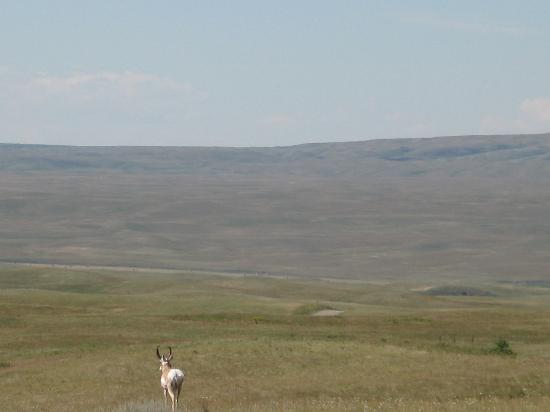
  3. The Prairies
  4. The Near North of the Canadian Shield
  5. The Great Lakes Lowlands
  6. The Ottawa-St. Lawrence Lowlands
  7. The Atlantic Region


Using Google Maps, determine in which region each of these places is located.  Then using "street view" write one sentence to describe what you see of the physical landscape for each place.  Post your answers on your blog.
  1. Kamloops, British Columbia
  2. Iqaluit, Nunavut
  3. Medicine Hat, Alberta
  4. Nipigon, Ontario
  5. Crescent Bay, Ontario
  6. Donnacona, Quebec
  7. Grand Falls-Windsor, Newfoundland

Thursday, November 25, 2010

The Importance of Place

What is a place?  
In small groups, make a list of things that a place must have to be called a "place".


 A place:
  1. has a location
  2. has physical and cultural characteristics
  3. can change
  4. interacts with other places
  5. is in a region

For example: 

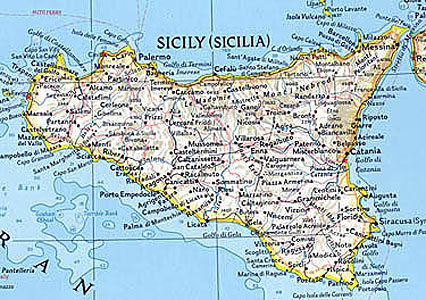
Sicily

1. Sicily can be found at 38º 08' N, 013º 23' E.


2. It is a large island with mountains and volcanoes and long sandy warm beaches.
3. Sicily has suffered from numerous eruptions from Mount Etna (the largest volcano in Europe) and earthquakes that have leveled towns.


4. Sicily has been invaded numerous times from the Greeks, the Carthaginians from North Africa, from the Romans, and from the Germans, the Americans, the Canadians, the British and the Australians in World War II.


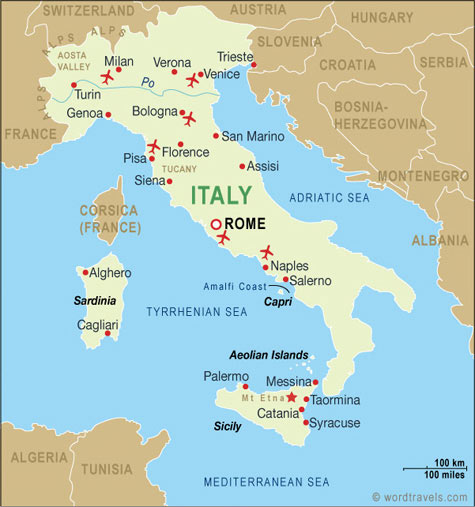
5. Sicily is part of Italy and lies in the Mediterranean Sea.


Now, with a partner, chose a place in the region you researched and show the five things that your place must have, to be called "a place".  Post it on your blog.


North West - Mounties and First Peoples

Read pages 177-178 in your textbook: Answer these questions fully in your blog.

  • What was the connection between whiskey and the fur trade?  What were the long term consequences for the Aboriginal people?  
  • Imagine what would have happened if whiskey had not been part of the fur trade.  What would have been the impact for the Assiniboin people, the Mounties, and Canada?


Read pages 179-182 in your textbook. Answer the following questions fully in your blog.


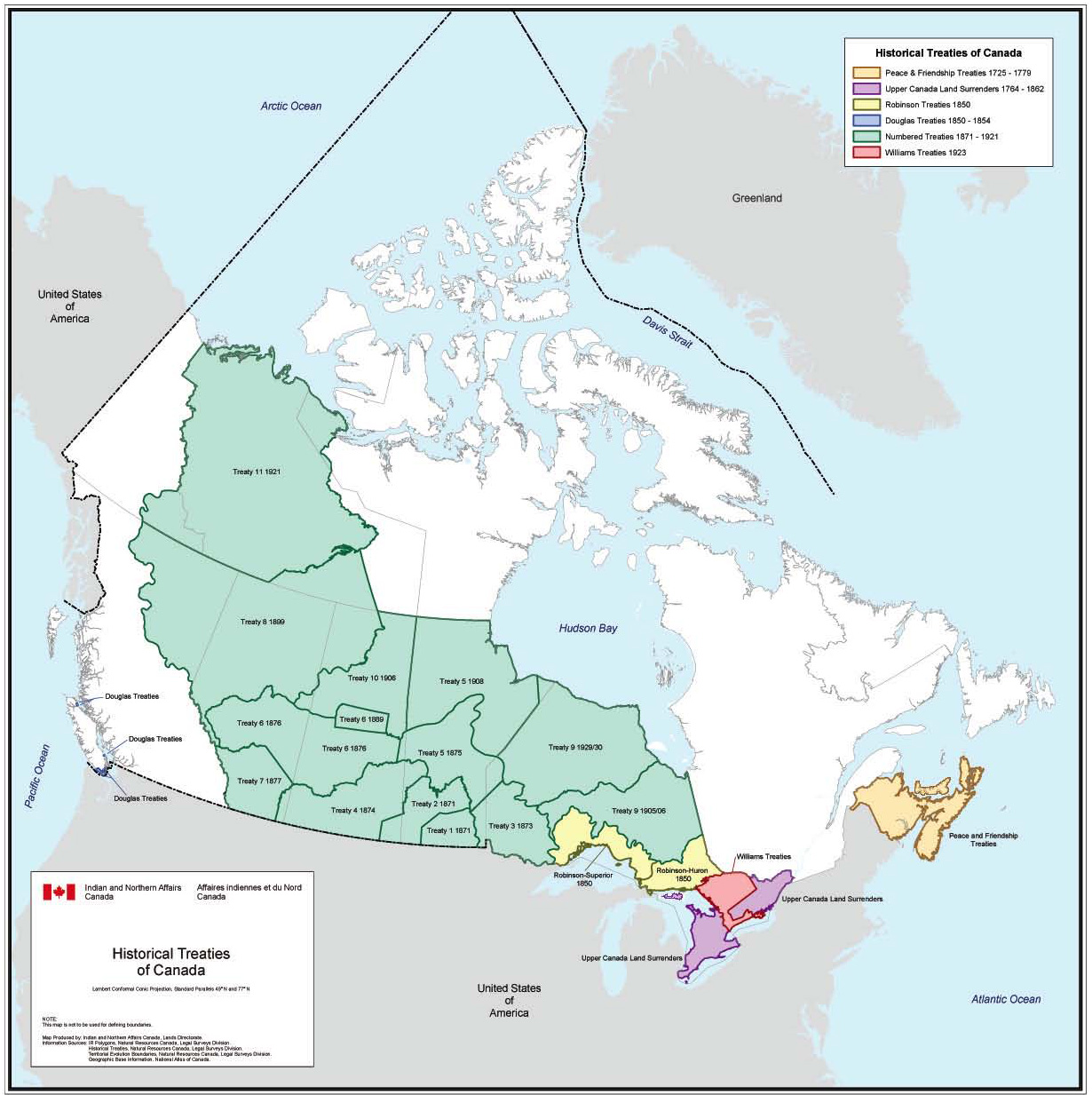
  • The treaties negotiated with the Cree and Saulteaux gave them a tiny piece of land compared to the 60% of Manitoba that they were asking for.  Why did the Cree and Saulteaux agree to what the Canadian government offered?  How were the Cree and Saulteaux cheated by the government?  How did the government justify this?  Imagine how the prairies would be different if the Aboriginal peoples on the prairies had been successful at farming.  What do you think might be different today?

Wednesday, November 24, 2010

The North West Mounted Police and The First Nations & Metis


Hollywood saw the North West Mounted Police with a romantic eye.  They were handsome, dashing, brave, loyal, tough, proudly Canadian and every woman's dream.  Conversely, they were also sometimes seen as bumbling, humourous and foolish.  Unfortunately, Hollywood's image of the Indigenous people of North America is quite different.  They were the villians, blood-thirsty and dirty.  Sometimes, they were portrayed as the 'noble savage'.  No matter how the Mounties or Indigenous people were portrayed, it was a stereotypical portrayal - one that did not show the reality of whom these people were.

Look at the following clips.  How have the people here been portrayed?

"North West Mounted Police" (1940)


"Rose Marie" (1954)


"Dudley Do Right" (1999)


"Due South"


"Monty Python's Flying Circus"


"The Lone Ranger" (1956)


It is important to remember when you are watching television or movies that they are someone else's opinion and not fact.  Look at the following links to find more factual information about the Mounties:


Click here.

For more information on the Metis:

Click here

For more information on the Plains people:


Click here.
In partners, choose one of the above three groups of people.  On your blog, write the outline of a movie or tv program that would show the reality of the group you have chosen and not a stereotype.  Include factual information and remember that your characters should portray "real" people, not just historical figures that you have read about or stereotypes that you might see in a Hollywood film.


Important People To Know Up To 1885

You will be responsible for knowing who these people and terms are.  You will be tested on this on December 16th.

  • William Lyon Mackenzie - a Scottish newspaperman who stood against the Family Compact and led the Rebellion in Upper Canada.
  • Louis Joseph Papineau - a French-Canadian lawyer and politician that led the Fils de la Liberte against the Chateau Clique in the Rebellion of Lower Canada.
  • John Lambton, Earl of Durham - Lord Durham was appointed Governor in Chief of the Canadas.  He was tasked by the British government to review the political problems and create a report for the British government.  He recommended the colonies be joined together, and eventually all of British North America be joined together.
  • George-Etienne Cartier - wealthy businessman who invested in and promoted railways.  He had fought in the Rebellion in Lower Canada, had been exiled and returned to become the leader of the parti bleu.  Along with John A. Macdonald, he was a driving force behind Confederation.
  • John A. Macdonald - Born in Scotland but raised from age 5 in Canada, Macdonald became the leader of the Tories.  He was one of the driving forces behind Confederation and became the first Prime Minister of Canada. 
  • George Brown - established and published The Globe newspaper (today known as the Globe and Mail) and leader of the 'Clear Grits', a radical political party in Canada West.  Brown was vehemently against Confederation until he went on a holiday to England.  While there he observed the British Parliament and realized that they were tiring of the colonies.  He returned ready to support Confederation.
  • D'Arcy McGee - established and published the New Era newspaper in Montreal.  He was a spokesman for Catholic rights and was elected to the legislature.  He was a strong supporter of Confederation and worked with Macdonald and Cartier to ensure Confederation would be accepted in Canada.  He was assassinated in 1868 after Confederation, most likely by Patrick Whelan, a Fenian.
  • Fenians - an Irish society that planned to harm Britain by striking out at the Canadians from across the border into the US.  Most Irish that emigrated carried a resentment of the British with them.  The attacks they made into Canada helped to convince the colonies that it would be safer if they joined together under Confederation.
  • Gabriel Dumont - the military commander for Louis Riel at both rebellions.
  • Thomas Scott - a prisoner of the Metis in the Red River Rebellion, he was a very belligerent prisoner and verbally and physically abused his guards.  Having pushed the Metis too far, Riel sentenced him to death and he was executed by firing squad.  His death turned opinion against Riel in Canada West.
  • Sir Hugh Allan - a wealthy industrialist who had made his money in shipping, manufacturing and railway building - he was given the contract build the transcontinental railway on the condition that he help fund the Conservative Party (the Tories) and John A. Macdonald.
  • Big Bear - leader of the Cree - he led his people to join in the rebellion along with the Metis.
  • Crowfoot - Leader of the Blackfoot nation.  He was a pragmatist - he knew that change was coming and did not see a reason to stand with the Metis and put his people through the difficulties of fighting a rebellion.
  • American Civil War - a war between the northern and southern United States over states' rights.  The divisive issue was slavery.
  • Canada East - Lower Canada
  • Canada West - Upper Canada
  • Confederation - the joining together of the Canadian colonies (Canada West, Canada East, Nova Scotia, New Brunswick, Prince Edward Island) to create the Dominion of Canada.
  • Parti Rouge - a small, radical political party led by Louis Joseph Papineau which attracted francophone farmers and business people who were opposed to the English commercial interests.
  • Parti Bleu - the most powerful political party in Canada East led by George-Etienne Cartier - focused on the economic development of Canada East and the protection of French Canadian rights.
  • Clear Grits - radical political party in Canada West led by George Brown.
  • Tories - more moderate political party in Canada West led by John A. Macdonald.
  • Charlottetown Conference - 1864 - a meeting of the Maritime colonies and the Canadas to discuss the possibility of Confederation.
  • Quebec Conference - fall of 1864 - the planning of the birth of the new nation, Canada, in which they decided on the division of powers between the provinces and the federal government; the delegates decided on a blueprint for Confederation that would be taken first to each province for debate and then to London and presented to the British parliament for approval.
  • British North America Act - Canada's constitution based on the resolutions decided upon at the Quebec Conference.  Passed by the British Parliament in 1867 in London and signed by Queen Victoria.
  • Dominion - a country that rules itself.
  • Hudson's Bay Company - a trading company that was established in British North America.  It was given control of Rupert's Land by the British government and also controlled all trading and commerce in this area.  The Hudson's Bay Company still exists today, however we know it as The Bay.
  • Red River Settlement - a settlement in what is now Manitoba.  It included Metis, 'country-born' (people of strictly European descent who were born in the Canadian colonies or in Rupert's Land), Scottish and Swiss colonists, and HBC employees.  This isolated community was the centre of the Red River Rebellion of 1869.
  • Rupert's Land - An area that extended from what is now northern Quebec and Ontario, into Nunavut, through Manitoba, Saskatchewan, and Alberta.  It was under the control of the Hudson's Bay Company.
  • Metis - people of the prairies who were descendants usually of French fathers and First Nations mothers.
  • Land speculators - someone who buys and sells land for profit.
  • Munitions - military weapons, ammunition, and equipment.
  • Provisional government - a temporary government established until the permanent government can be put into place.
  • Fort Garry - a HBC fort near Red River that was taken and held by the Metis during the Red River Rebellion.
  • Orange Order - an organization of pro-British citizens in Canada West who pushed for the arrest and hanging of Louis Riel after the execution of Thomas Scott.
  • Fort Carlton - an HBC fort near the new settlements of the Metis in Saskatchewan.
  • Bison - buffalo - the Metis depended on bison for their survival.
  • The List of Rights - a list created by the Metis during the time of the Red River Rebellion that included (amongst other things) the right for the people of Manitoba to elect their own Legislature, that all sheriffs, magistrates, constables, school commissioners, etc. be elected by the people, that all public documents and acts of Legislature be published in both official languages, that judges must speak English and French, and that treaties between First Nations and the Canadian government be concluded to ensure peace.
  • The Bill of Rights - created by the Metis leading up to the Northwest Rebellion - a far more detailed list than the List of Rights.
  • North West Mounted Police - the precursor to the RCMP.  An organized paramilitary policing force, formed to keep peace on the frontiers of Canada.
  • Batoche, the town where the Northwest Rebellion occurred in Saskatchewan.